
About Housingkind
Challenge: Communities want affordability, walkability, and neighborhood vitality, yet often resist the housing types designed to support them. Developers face constant pushback when proposing Missing Middle projects, and need a way to communicate their benefits.
Solution: Housingkind is a digital visualization platform that helps communities see how missing middle and mixed-use housing can fit into their real neighborhoods.
Deliverables: Research & Strategy, UX Research, Systems Thinking, Design Strategy, Operations Management, Product Design
Timeline
Aug 2025 - Present
Role
UX Design & Research
Org
In partnership with ViaCDC, AARP and Startingblock
Team
Sam Popek, Obid Ochilov, Jaden Radcliff, Lucy Murdock
OVERVIEW
Across Wisconsin, housing decisions are shaped by a web of policies, finances, zoning codes, neighborhood identity, and deeply personal ideas of home. While cities face housing shortages, aging populations, and environmental pressure, communities often resist the very solutions designed to help.
The contradiction we kept seeing: People love walkable, mixed-density neighborhoods when they travel, but oppose similar housing at home.
This project began with a design challenge from the MD+I Design Horizon:

How might we design to foster access, dignity, and belonging in Wisconsin’s housing landscape?
RESEARCH METHODS
Began in the empathizing phase, guided by the MS Design + Innovation (MD+I) program’s focus on addressing the housing crisis.
Spoke with stakeholders across the housing system, including developers, city council members, housing advocates, and residents of land trusts and housing support programs.
Explored how housing is shaped by policy, communication, lived experience, and uneven access to power.
Identified a shared tension: while gentle density is widely acknowledged as necessary, it often faces resistance rooted in fear, abstraction, and misunderstanding.
These insights revealed a critical perception gap, which became the foundation for Housingkind.
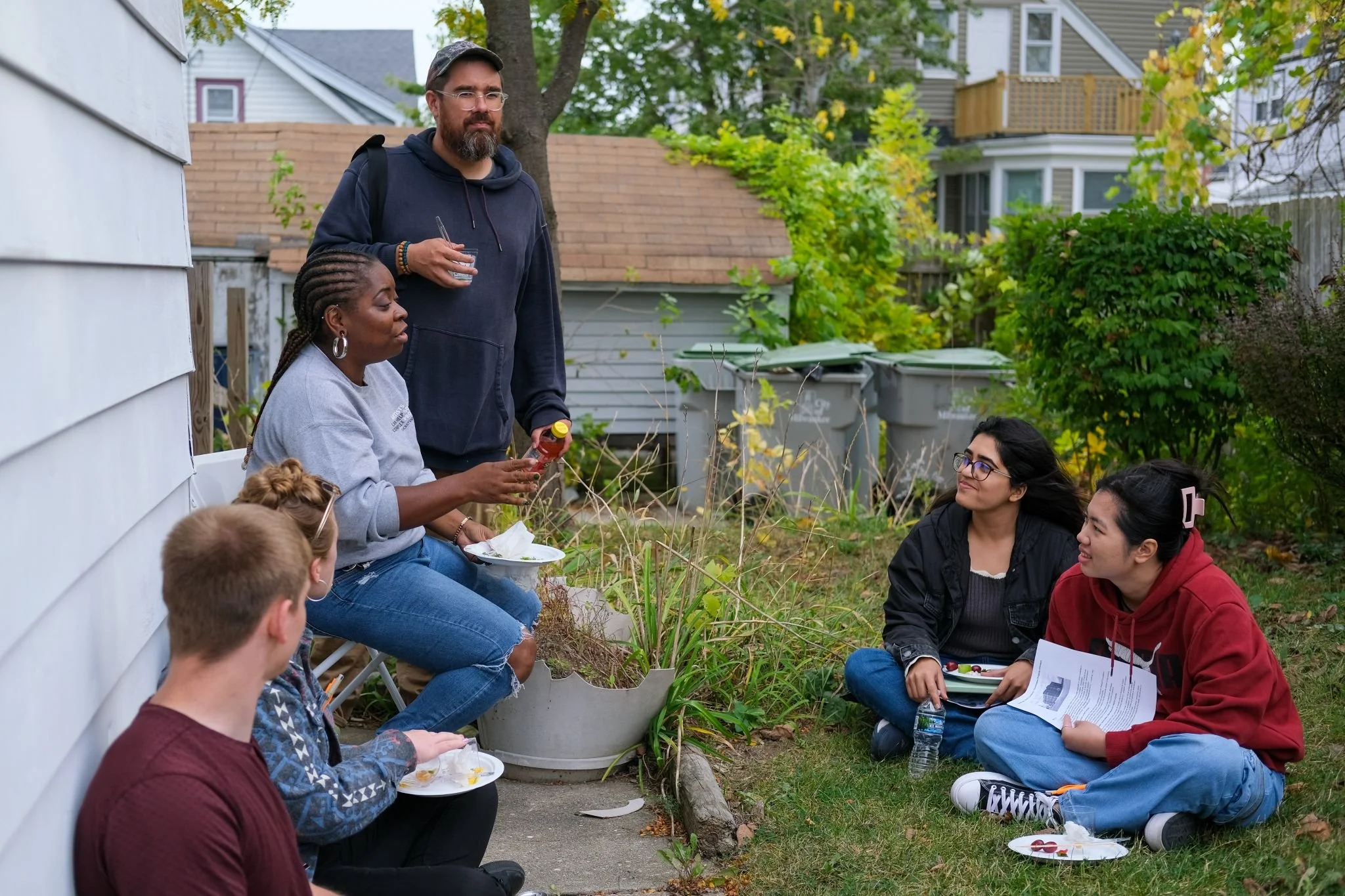
MD+I with Symphony Zawadi from CR8TV House in Miluwakee learning about her connection to and visions for her neighborhood.
SYSTEMS MAPPING
Why the Missing Middle keeps getting stuck
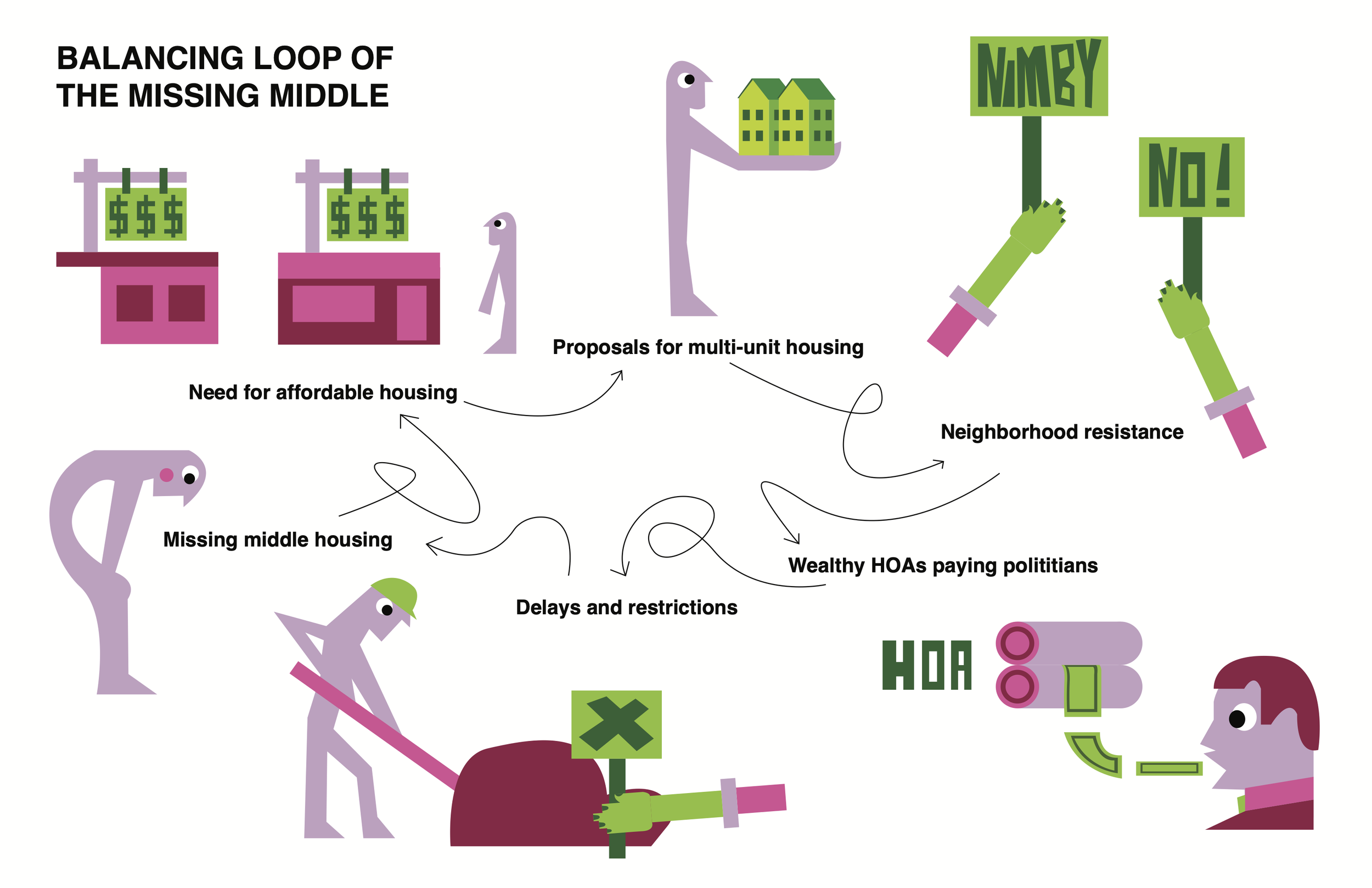
Through stakeholder interviews and systems mapping, we identified a reinforcing loop that repeatedly prevents Missing Middle housing from moving forward.
KEY INSIGHTS
Resistance Isn’t About Density, It’s About Perception
Most stakeholders agree that Missing Middle housing is necessary, yet opposition remains strong. Resistance is driven by fear of the unknown and imagined negative outcomes.
Housing Proposals from Developers Are Too Abstract to Build Trust
Plans, zoning language, and diagrams fail to communicate scale, context, and lived experience. When people can’t visualize change, they default to resistance.
Power and Process Reinforce the Status Quo
Well-resourced groups, such as HOAs, are more able to delay or block projects through political pressure and prolonged review processes, even when broader housing need is clear.
STRATEGIC REFRAME
Our research showed that resistance to Missing Middle housing is driven less by opposition to density itself and more by fear rooted in abstraction. When people can’t visualize change, they fill in the gaps with worst-case assumptions.
This shifted design’s role from persuasion to clarity: making housing proposals tangible, place-based, and easier to understand. We reframed our HMW:
How might we help communities clearly see how Missing Middle housing fits into their real neighborhoods, so conversations shift from fear and speculation to shared understanding?
OPPORTUNITY AREAS
Make Missing Middle housing visible in real neighborhood contexts
Reduce fear by replacing proposals with concrete visuals and stories
Partner with developers to translate proposals to be understandable
Build public evidence base that supports future proposals
SOLUTION: HOUSING KIND
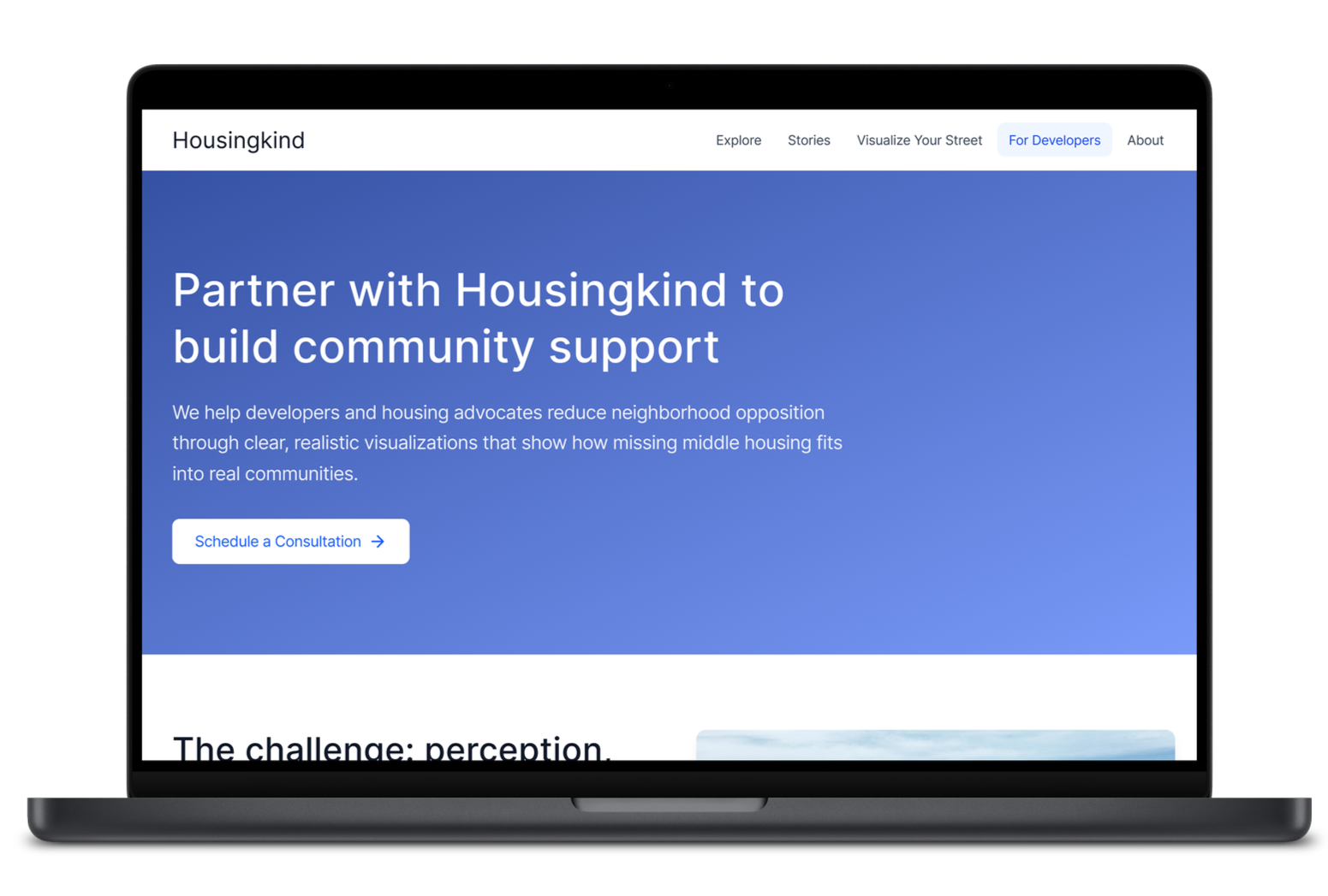
Housingkind is a digital visualization platform that helps communities understand how Missing Middle and mixed-use housing fits into real neighborhoods.
It functions as a shared civic resource for developers, planners, and community members by grounding housing conversations in context, scale, and lived experience.
Real housing proposals are visualized in their actual neighborhood context
Visuals are used in community meetings, planning reviews, and online exploration
Once projects are built, neighbor stories are collected and added to a growing public library
Over time, Housingkind builds collective understanding and reduces friction around future projects.
PLATFORM MODEL
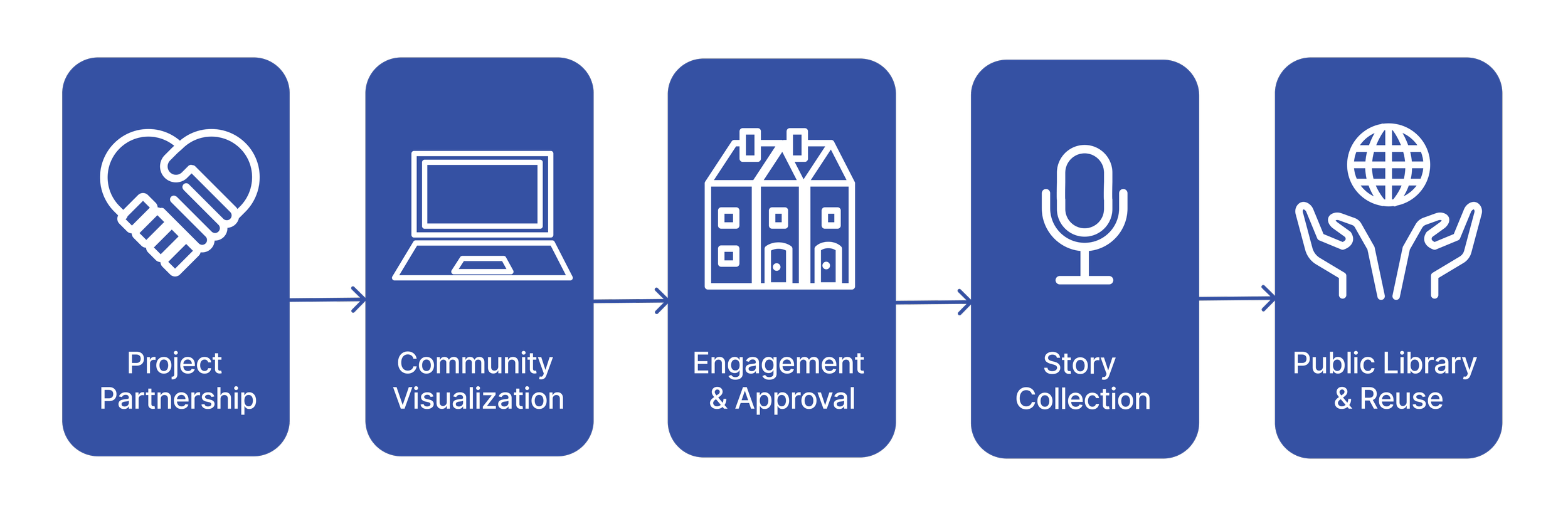
Project Partnership: We collaborate with developers and housing advocates to work from real Missing Middle proposals, grounding the platform in active, place-based projects.
Community Visualization: Proposals are translated into neighborhood-specific visuals that show scale, massing, and street presence in a way community members can easily understand.
Engagement & Approval: These visuals support earlier, more constructive conversations in public meetings, planning reviews, and online exploration, helping reduce friction and build shared understanding.
Story Collection: Once projects are built, we gather stories from neighbors about how the development fits into daily life, walkability, and community connection.
Public Library & Reuse: Visuals and stories are added to a growing public library, creating a reusable evidence base that supports future projects and informs broader policy conversations.
DESIGN + PRODUCT
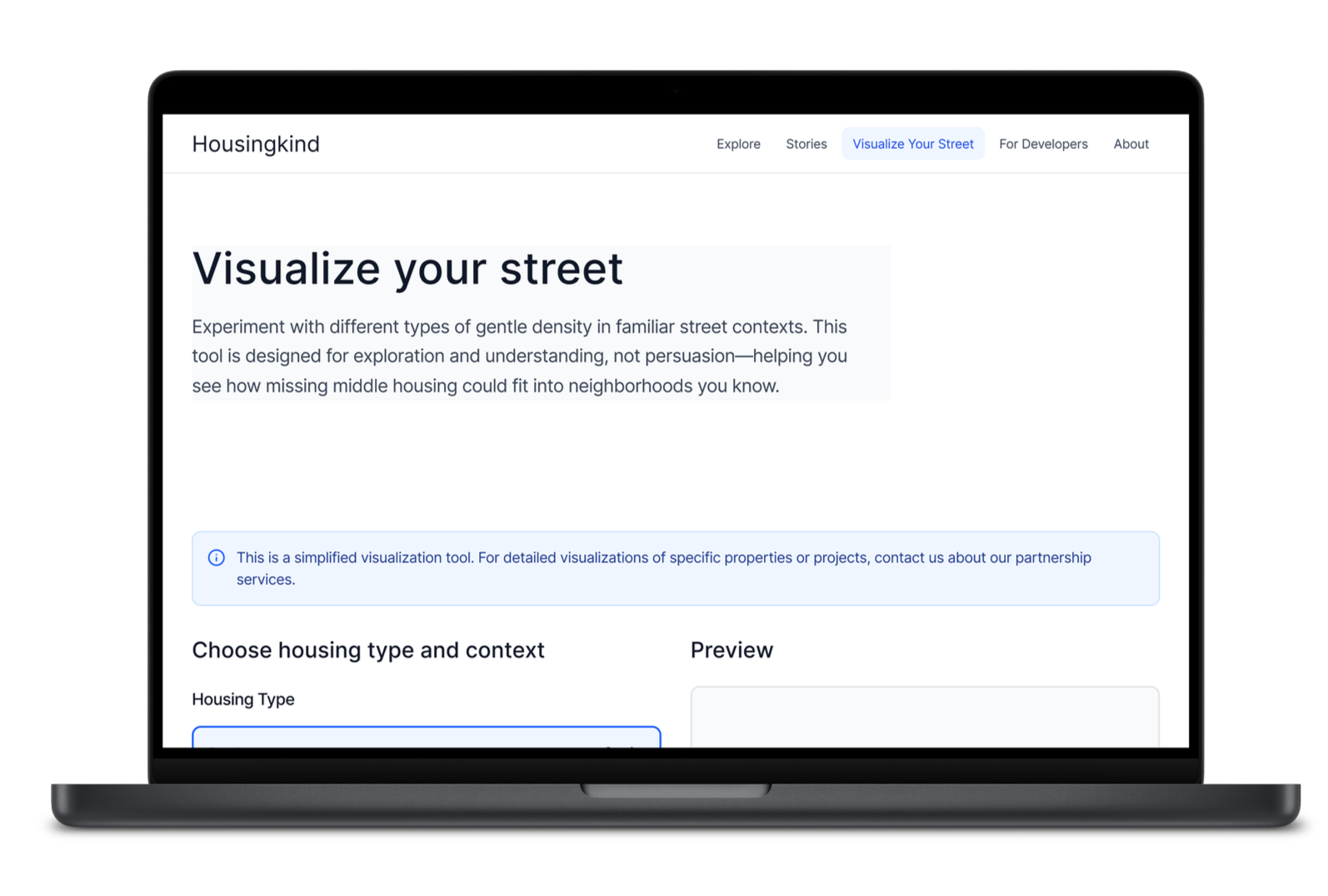
We are currently designing the Housingkind website end-to-end in Figma, with a focus on translating strategy into a buildable, real-world product.
Our work includes:
Defining the full website structure and information architecture
Designing core screens and interaction patterns
Establishing brand principles centered on calm, trust, and civic clarity
Building a scalable component library to support future iteration and growth
As designs are finalized, the Figma system will serve as the source of truth for development, with components and layouts translated into code using an AI-assisted design-to-development workflow. A complete website prototype will be shared once development is complete.
STAKEHOLDER RESPONSE
We presented Housingkind to developers, housing advocates, and city stakeholders across Wisconsin.
Their feedback validated both the problem framing and the approach:
“Nail on the head. This solves a major problem.” — Milwaukee Housing Advocacy Organization Representative
“Huge potential to model gentle density in a way people actually understand.” — Madison Developer
“I fully support your goals- you are working in the right direction” — Madison City Counsel Alder

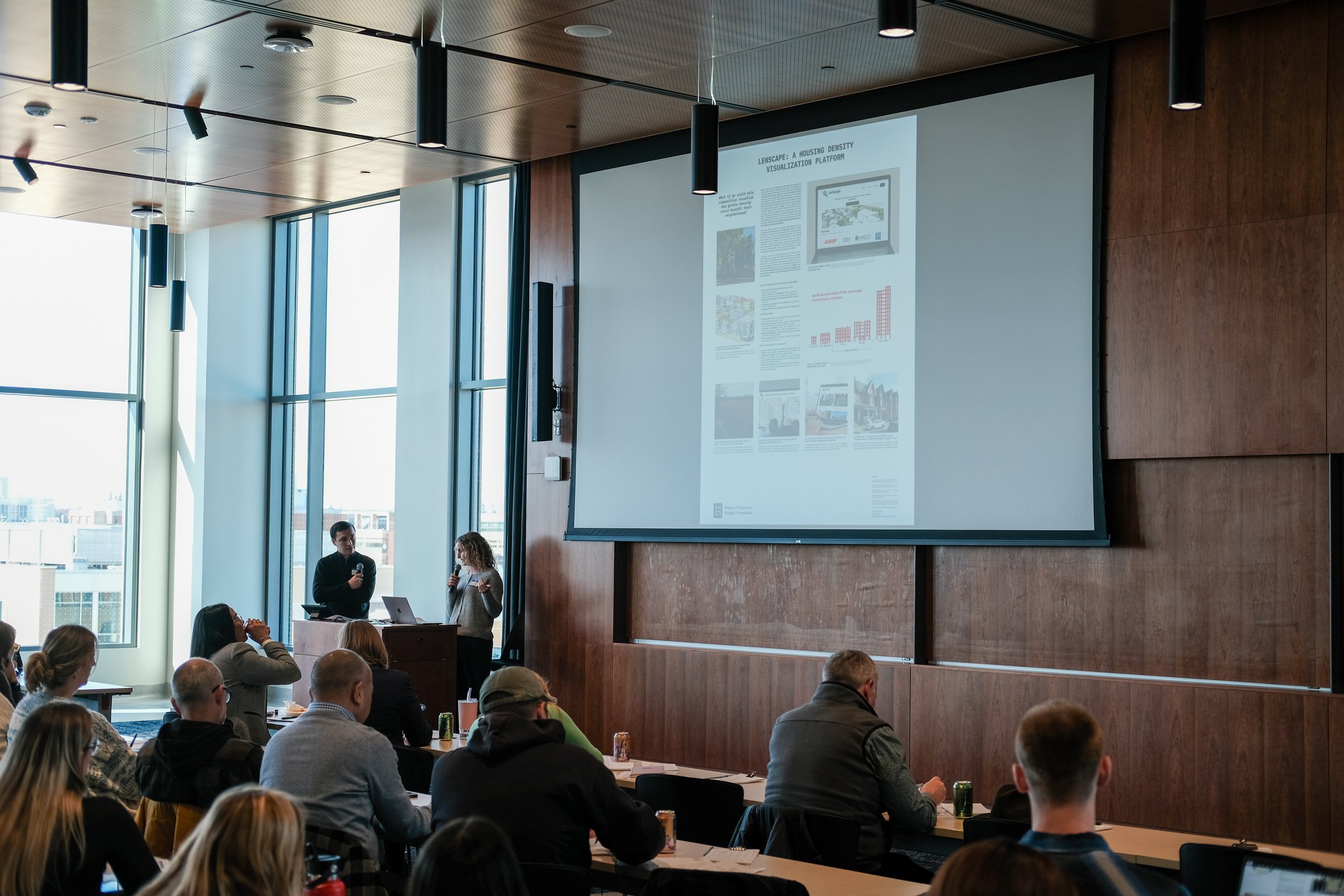
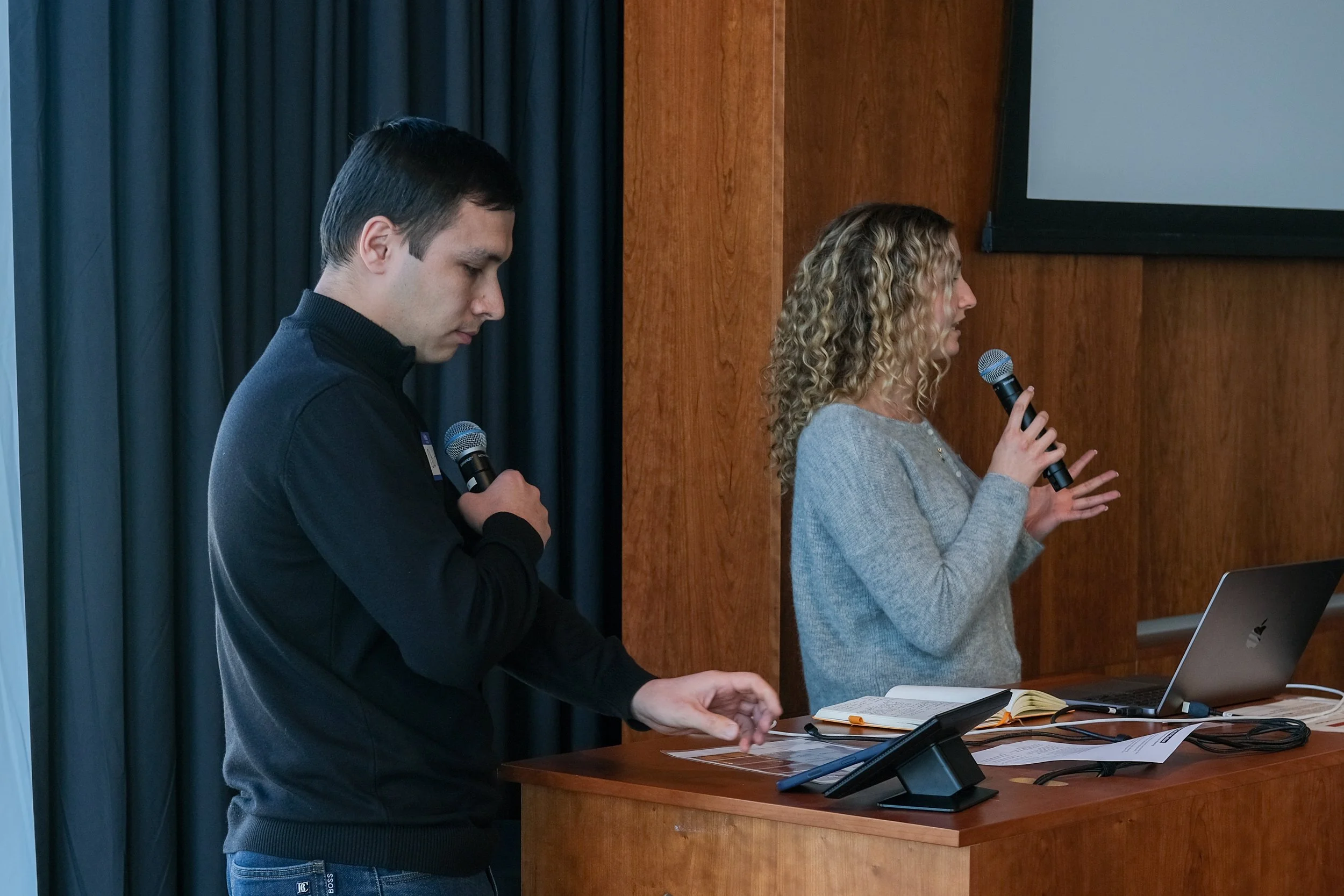
Housingkind team presenting to stakeholders, including AARP Wisconsin, Via CDC and Startingblock Housing Accelerator.